
The Nyerere National Park, formerly known as the Selous Game Reserve, ranks among the largest protected regions globally. Situated in southern Tanzania, it has been designated as a UNESCO World Heritage Site since 1982. This designation is attributed to its rich biodiversity and the pristine environment found within its boundaries. Although it is located far from Tanzania’s northern national parks, it deserves a visit. Spanning a total area of 50,000 km² along with extra buffer zones, it is even larger than Denmark.
Wildlife
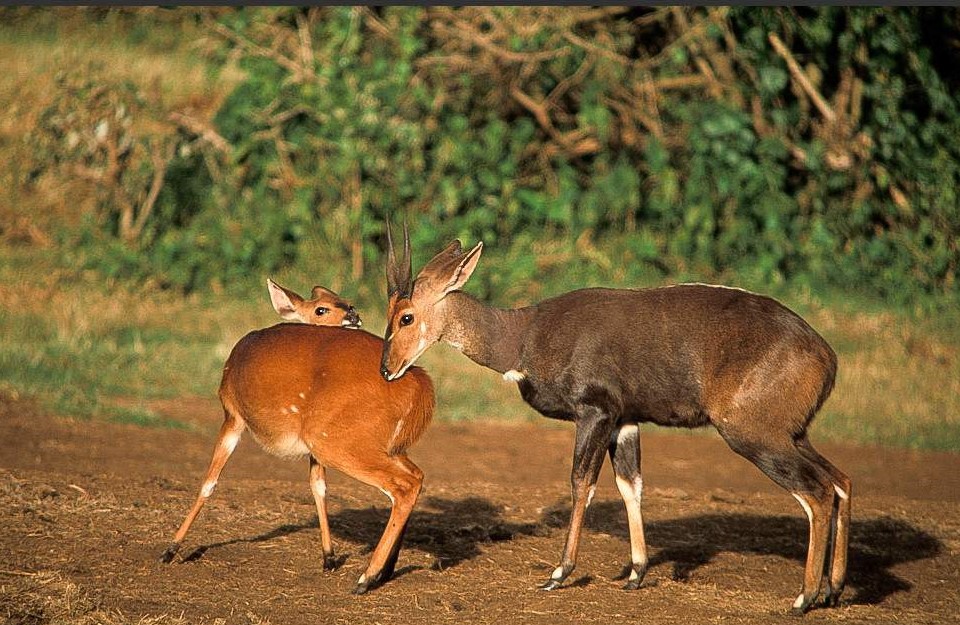
You’ll encounter a vast array of wildlife while on safari in Nyerere National Park. The park is home to lions, leopards, hippos, and crocodiles. You may also see the endangered black rhinos and the elusive East African wild dogs, along with hyenas. Additionally, you can find Cape buffalo, Masai giraffes, wildebeests, and zebras, the latter two famous for the spectacular wildebeest migration! Furthermore, the park hosts impalas, significant populations of Lichtenstein’s hartebeests, waterbucks, and sable antelope, as well as elands and bushbucks. Compared to other parks, it’s much more tranquil here, providing you with the opportunity for a distinctive experience during your Tanzania Safari.
Birds
Nyerere National Park is inhabited by a multitude of bird species. Researchers have documented more than 445 unique bird species residing in the diverse environments found within Nyerere. The giant kingfishers, pink-backed pelicans, and African skimmers are examples of birds that can be found near the lakes. On the sandbanks, you might spot white-fronted bee-eaters, fish eagles, carmine bee-eaters, ibises, and palm-nut vultures. Among the water birds present in Nyerere National Park are the purple-crested turaco, yellow-billed stork, trumpeter hornbill, white-crowned spur-winged plovers, malachite kingfishers, and various small waders, along with migratory species.
Boat safari
Nyerere is among the few national parks that offer the opportunity for boat safaris. It is also one of the rare parks that permits walking safaris. This trip is perfect for those who wish to appreciate the stunning views of the Rufiji River, which is home to numerous hippos, crocodiles, and stunning bird species. The sunset viewed from the boat can be breathtaking – experiencing the tranquility of the river as the sun sinks below the horizon is truly unmatched.
Best time to visit
The optimal period to visit Nyerere is during the dry season, which spans from June to October. Wildlife becomes more visible as the vegetation is less dense, and animals tend to congregate around the familiar water sources. Following the end of the heavy rains, the roads become quite difficult to traverse, and numerous camps are closed as the wet season concludes. A prime time to observe the elusive wild dogs is during their denning phase, which starts in June and continues until August.
This safari destination is offered by Mainson Safaris.