
Ruaha National Park is the second-largest national park in Tanzania, following Nyerere National Park, and is situated in the central region of the country. Its relative isolation means it attracts significantly fewer visitors compared to other parks in the Northern circuit. The park is traversed by the Great Ruaha River, which is its most vital waterway.
Ruaha boasts a diverse array of flora. However, it is predominantly known for its acacia trees and the numerous baobab trees found throughout. More than 1,650 species of plants have been recorded in the park.
Wildlife
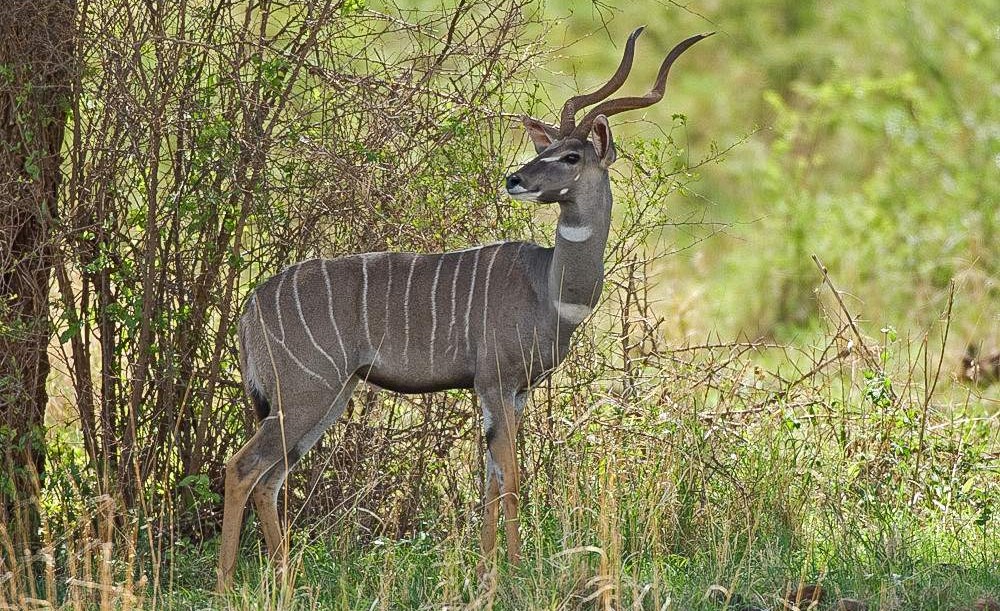
Ruaha boasts a substantial population of African elephants, with some considering it to have the highest concentration on the continent. The National Park likely has more elephants than any other in East Africa. It also hosts remarkable mammals such as kudu, sable, and roan antelopes, which are unique to this national park. Moreover, nearly 10% of Africa’s lion population resides here!
Other animals you can find in the park include leopards, cheetahs, and giraffes. The park is also home to numerous zebras, elands, impalas, bat-eared foxes, and jackals. Although there isn’t a globally renowned great migration occurring in this park, it remains a stunning place to visit. With a little luck, you might also encounter the endangered wild dogs within Ruaha National Park.
Birds: Approximately 571 various bird species can be found in Ruaha National Park, such as the Crested Barbet, Dickinson’s Kestrel, Pale-billed Hornbill, Violet-crested Turaco, Racket-tailed Roller, Plovers, Kingfishers, Hornbills, Green-wood Hoopoes, Sunbirds, Bee-eaters, and Egrets.
Best time to visit
The route to Ruaha is accessible year-round. Ruaha National Park features a bimodal rainfall pattern, with the short rainy season starting in November (February is the ideal time for bird watching!), and the long rainy season occurring from April to May. The park undergoes its dry season from June to October.
This travel destination is offered by Mainson Safaris.