
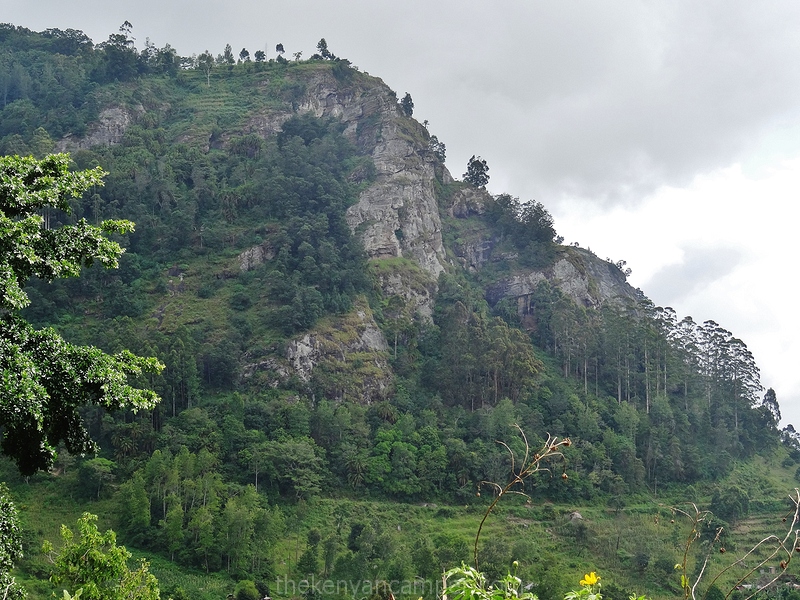
Kibale National Park. The 795km² Kibale National Park features one of the most beautiful and diverse tropical forest regions in Uganda. It hosts a wide array of forest wildlife, most notably 13 species of primates, including the chimpanzee. The northern and central sections of the park are predominantly forested, located on the uplifted Fort Portal plateau. The highest point in Kibale is its northern tip, which rises to 1590m above sea level. This northern region of Kibale is also the wettest, with an average annual rainfall of up to 1700mm, primarily occurring between March and May and September-November. Overall, the climate is typically pleasant, with annual temperatures ranging from 14-27°C.
In the south, temperatures are warmer, and rainfall is less, as the landscape descends into the hot rift valley floor, where forests transition into open grasslands.
Established as a protected area in October 1993, the 766km² Kibale Forest National Park stretches southward from Fort Portal, creating a continuous expanse with Queen Elizabeth National Park. The park comprises patches of grassland and swamp, although rainforest is the main type of vegetation, found at soaring altitudes of 1,100-1,590m, and displays a flora composition that bridges typical eastern Afro-montane and western lowland forests.
The southern part of Kibale borders Queen Elizabeth National Park, and together these areas preserve a wildlife migration corridor that spans 180 kilometers, stretching from Ishasha, the more remote southern section of Queen Elizabeth NP, to the Sebitoli forest in northern Kibale. The Kibale-Fort Portal region is among Uganda’s most rewarding destinations to visit. The park is conveniently located near the peaceful Ndali-Kasenda crater area and is just a half-day’s drive from Queen Elizabeth, the Rwenzori Mountains, Semuliki National Parks, and the Toro-Semliki Wildlife Reserve.
Kibale boasts the highest variety and density of primates in Africa. It is particularly abundant in primate species, with a total of 13 recorded, marking the highest number for any national park in Uganda. Among these 13 species, the chimpanzee is the most renowned, being our closest relative. Kibale houses Uganda’s largest population of this endangered species, with 1,450 chimpanzees. Additionally, Kibale is the habitat of the rare I’Hoest’s monkey as well as the largest population of the threatened red colobus monkey in East Africa. Other primate species present include the black and white colobus, blue monkey, grey-cheeked mangabey, red-tailed monkey, olive baboon, bush baby, and potto.
Kibale Forest is home to at least 60 species of mammals. While the forest is renowned for its primate sightings, spotting larger mammals can be quite challenging, even though the area boasts an impressive list that includes lion, leopard, elephant, buffalo, hippo, warthog, giant forest hog, bushpigs, bushbuck, sitatunga, and red and blue duikers.
The elephants in Kibale Forest are part of the forest race, which is smaller and has more hair compared to the more commonly known savanna elephant. During the wet season, elephants often migrate into the Kanyanchu area, but tourists rarely catch a glimpse of them.
Birdlife
Approximately 335 bird species have been documented in various national parks, including Nahan’s francolin, Cassin’s spine tail, blue-headed bee-eater, and masked apalis. In contrast, Kibale’s bird list features a similar assortment of forest birds as Semliki National Park, minus the approximately 40 unique Semliki species and with a broader selection of water and grassland birds. The recent spotting of a green-breasted pitta generated excitement among ornithologists in Uganda, while those with a hopeful outlook might keep an eye out for Prigogine’s ground thrush, a potentially endemic species or variant that was recorded only once in the 1960s and has not been observed since.
The prime location for bird watching is the Bigodi Wetland Sanctuary, which offers a four-hour trail where knowledgeable guides can help you discover several localized species that you might miss on your own.
Best time to visit
Kibale National Park is accessible throughout the year. It is important to consider the season during which you plan to visit, as the park experiences two distinct seasons. The dry season, which is generally the most popular time to visit, runs from June to September and from December to February. Conversely, the wet or rainy season begins in March and continues until May, as well as from October to November. The rainy season is marked by significant rainfall but offers excellent opportunities for bird watching.
This safari destination is offered by Mainson Safaris.