Masai Mara National Reserve. The Maasai Mara National Reserve is located in Narok County, Kenya. This reserve is situated along the Great Rift Valley and spans approximately 1,510 square kilometers. The Masai Mara is a part of the larger Serengeti ecosystem in Tanzania, which covers an area of 25,000 square kilometers. The southern section of the reserve includes the Serengeti National Park, with Masai pastoral communities located to the northeast and the Oloololo/Siria escarpment to the west. The reserve is named after a tribe that has resided in the region for hundreds of years. In the local language of the Masai, “Mara” translates to “spotted,” reflecting the short trees and bushes that are scattered throughout the landscape.
The Masai Mara National Reserve is a component of a broader Mara ecosystem that also encompasses the Mara Triangle, alongside other Maasai Conservancies such as Kerinkani, Kimintet, Koiyaki, Lemek, Maji Moto, Mara North, Naikara, Ol Chorro Oirowua, Ol Derkesi, Olkinyei, Oloirien, and Siana. The reserve is drained by three main rivers: the Talek River, the Sand River, and the well-known Mara River. The landscape of the reserve is primarily characterized by open grasslands, seasonal rivers, and acacia trees. The Maasai Mara Reserve experiences two distinct rainy seasons: the long rains, which occur from April to May, and the short rains, which take place from November to December.
The eastern section of the Maasai Mara, which is the most frequented, is overseen by the government of Narok County, while the Mara Conservancy manages the western Mara Triangle. The outer regions of the reserve, where the majority of local Maasai communities reside, are governed by elected Maasai leaders. The Mara Triangle serves as the primary entry point for the migrating wildebeest into the Maasai Mara National Reserve.
Wildlife and Tourism in Masai Mara
The Maasai Mara National Reserve is among the most frequented and renowned wildlife conservation areas in Africa. It is celebrated for its population of the big five mammals – elephants, leopards, rhinos, lions, and buffalo. The Maasai Mara is the only wildlife reserve or national park that has an indigenous population of black rhinos. Once, hundreds of rhinos freely inhabited the park, but from the 1970s to the early 1980s, poachers decimated their numbers. Only 15 individuals remained, and while their population has gradually increased, it has never returned to its former levels. Even with the slow rise in black rhino numbers, it remains one of the top spots to observe these mammals in Africa.
In addition to the big five, the reserve also hosts grazers such as duikers, impalas, hartebeests, giraffes, roan antelopes, zebras, topis, wildebeests, and Thomson’s gazelles. The population of some of these antelopes fluctuates with the seasons due to the great migration from the Serengeti and Loita Plains. Additionally, the reserve is inhabited by crocodiles, hippos, jackals, cheetahs, hyenas, servals, and foxes. The Maasai Mara boasts more than 470 bird species, including vultures, secretary birds, ostriches, marabou storks, long-crested eagles, lilac-breasted rollers, hornbills, crowned cranes, and African pygmy-falcons.
Activities
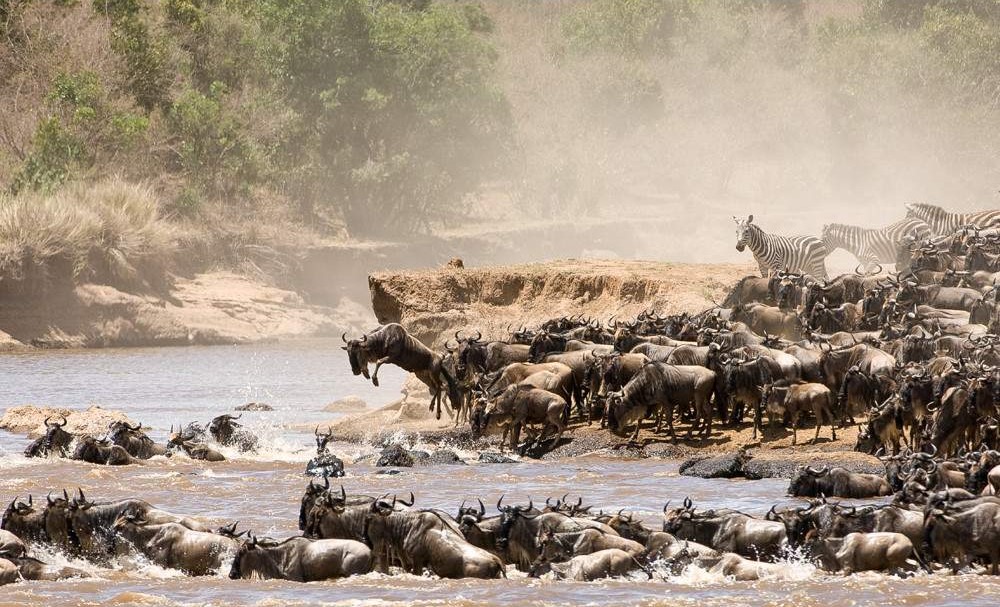
Visitors can engage in activities such as nature walks, bird watching, cultural interactions with the Masai, hot air balloon rides, and photography tours. Many travelers prefer to visit the park during the famed Wildebeest Migration, when over 1.7 million wildebeests, 500,000 zebras, and 200,000 other grazing animals travel from Tanzania’s Serengeti National Park to the Masai Mara in search of fresh grazing lands. These migrating animals must navigate rivers filled with crocodiles and areas inhabited by big cats. This remarkable migration presents a fantastic chance to observe the struggles between predators and their prey.
The Mara Triangle
The Masai Mara Triangle is a unique section of the Masai Mara National Reserve that is managed by a non-profit conservancy established by local Maasai communities. With the Mara River flowing through this triangle, it ranks as one of the premier locations globally for wildlife viewing.
Here, you have a great chance to observe various animals. The renowned Big Five – elephant, lion, leopard, rhino, and buffalo – are residents of the Masai Mara Triangle. Additionally, if you’re fortunate, you might encounter cheetahs, servals, hyenas, bat-eared foxes, and either black-backed or side-striped jackals. The Mara Triangle also hosts hippos, crocodiles, baboons, warthogs, topis, elands, Thomson’s and Grant’s gazelles, impalas, waterbucks, oribis, reed-bucks, zebras, and many other species.
How to get there
The journey from Nairobi to the Masai Mara spans 260 kilometers and typically takes between five to six hours by road. Alternatively, you can opt for a flight, as the park is just a short 45-minute trip from Nairobi. Various airstrips are available to access different regions of the Masai Mara.
Best time to Visit
It is advisable to visit the Masai Mara from mid-July to mid-October, coinciding with the Great Wildebeest Migration. However, the drier months of the year, including June to October and December to March, are also great times to explore the Masai Mara, as you can see the Big Five along with a variety of other wildlife.
This safari destination is offered by Mainson Safaris.